Applied AI Scientist · Multimodal AI · Computer Vision · Foundation Models
Building robust AI systems for multimodal data, computer vision, and real-world applications.
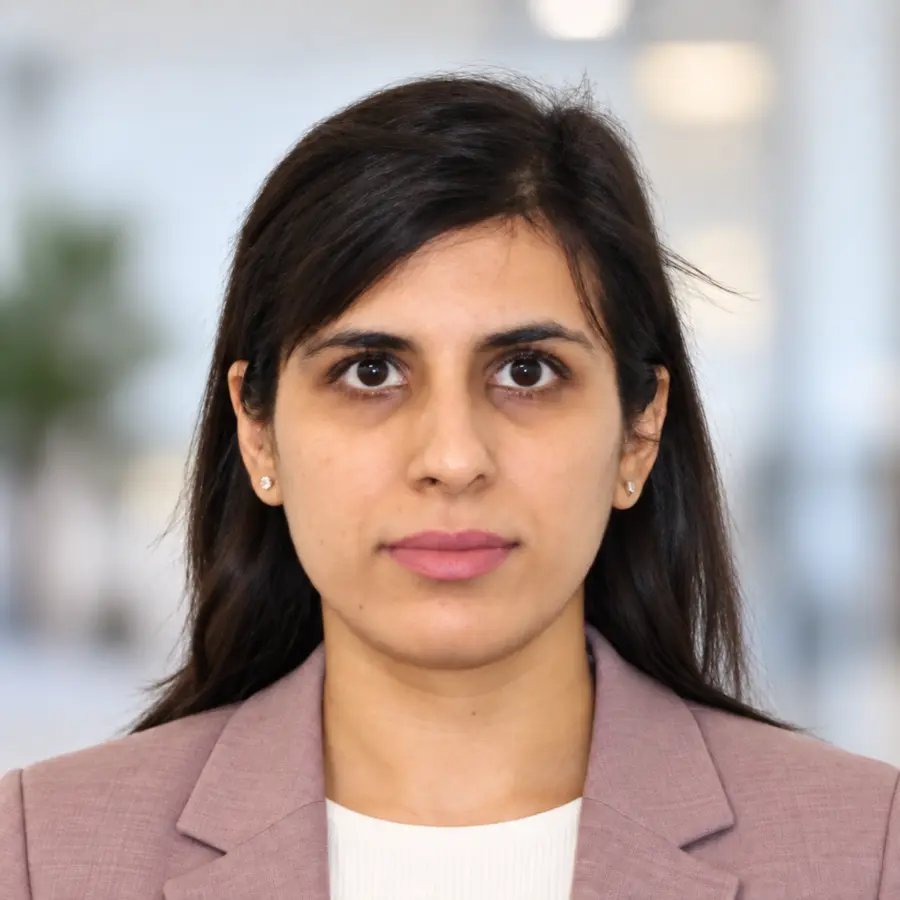
I'm Kanika Bhalla, PhD, an applied AI researcher at Washington University School of Medicine. I lead end-to-end research projects across breast MRI, mammography, clinical data, and foundation-model representations, spanning data curation and harmonization, representation learning, multimodal fusion, robustness evaluation, survival modeling, and responsible AI.
From pixels to prognosis, I build and rigorously evaluate AI systems designed for real-world medical complexity.
01Multicenter DCE-MRI
Multicenter AI for treatment-response prediction
Leading an end-to-end research project to predict pathologic complete response from pretreatment DCE-MRI, spanning data curation and harmonization, tumor segmentation, representation learning, and rigorous evaluation. Systematically evaluating CNNs, Vision Transformers, transfer learning, foundation-model embeddings, tumor-focused inputs, subtype-aware modeling, and fairness across centers.
Developed an end-to-end multimodal AI pipeline encompassing DCE-MRI tumor segmentation, image preprocessing, modality-specific feature extraction, and learned fusion. Integrated MIRAI-derived DBT representations with Pillar-0 MRI embeddings to predict treatment response before neoadjuvant therapy.
Mean cross-validated ROC-AUC0.79 ± 0.06MIRAI DBT + Pillar-0 DCE-MRI representations
Multimodal AIMIRAIPillar-0
03Longitudinal risk
Breast cancer recurrence-risk modeling
Imaging, clinical, and fusion models evaluated with survival-aware metrics, time-dependent AUC, Kaplan–Meier analysis, and molecular-subtype studies.
Survival AnalysisClinical AIRisk Stratification
04Responsible medical AI
Shake the Image, Watch the Report
Evaluated the robustness of six multimodal report-generation models using embedding-based unusualness scoring, BERTScore, RadGraph-F1, and LLM evaluation.
Average findings erased by motion blur53%Approximately 15% laterality errors among findings that remained
Multimodal LLMsRobustness3rd Place · 2026
05Mammo-CLIP
Five-year breast cancer risk prediction
Led a multidisciplinary datathon team to benchmark foundation-model embeddings, analyze equity across race and density, and study complementarity with the Gail model.
CLIPHealth EquityRunner-Up · 2025
06Master’s research · Natural images
Fuzzy CNN for multi-focus image fusion
Developed a fuzzy CNN-based framework to identify focused and defocused regions and fuse partially focused natural photographs into all-in-focus images. Evaluated the approach on three natural-image benchmarks, including Lytro, and compared it with established fusion methods.
Automated TFT-LCD defect segmentation and laser-path planning
Developed an industrial computer-vision pipeline for defect localization and segmentation using 250 RGB TFT-LCD panel images. Integrated SVD-Reinhard color normalization, neutrosophic Canny segmentation, edge localization, and automatic laser-cutting path generation, with benchmarking against conventional and deep-learning methods.
IEEE Transactions on Instrumentation and Measurement · 2022View paper
Industrial AIComputer VisionSegmentation
08Brain MRI + Digital Histopathology
Information-preserving preprocessing for medical AI
Investigated information loss introduced by widely used histogram-equalization techniques across brain tumor MRI and colorectal H&E histopathology datasets. Combined mathematical analysis with PCC- and SSIM-based evaluation and downstream deep-learning classification on brain MRI to examine how preprocessing choices affect data fidelity and model performance.
Multimedia Tools and Applications · 2024View paper
Digital HistopathologyMedical Image ProcessingDeep Learning
09Brain MRI · Unsupervised learning
Unsupervised MRI segmentation for Parkinson’s disease
Developed a hybrid medical-image segmentation framework combining discrete wavelet feature extraction, K-means clustering, and fuzzy median filtering to delineate brain tissue regions in MRI. Evaluated the approach quantitatively on open-source benchmark and clinical datasets, demonstrating experience with unsupervised learning, image enhancement, segmentation, and uncertainty-aware processing.
International Journal of Fuzzy Systems · Springer · 2021View paper
My work sits at the intersection of artificial intelligence, medical imaging, and translational research.
I design end-to-end research pipelines from data curation and harmonization to model development, subgroup analysis, and clinical evaluation. I care equally about model performance, reproducibility, and whether an AI system works fairly across the people it is meant to serve. My research approach extends to high-dimensional, multimodal problems where data quality, distribution shift, model reliability, and rigorous evaluation matter.